
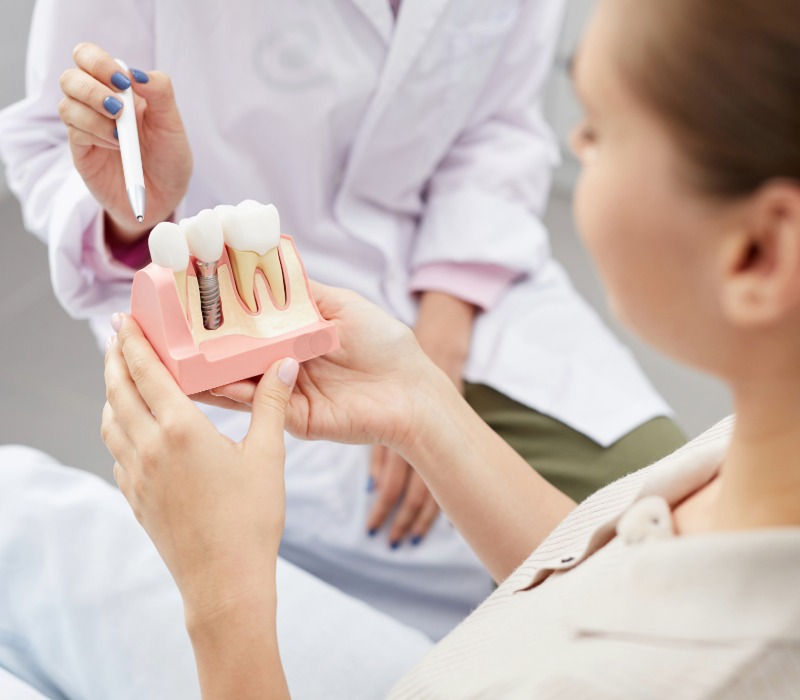



Dental implants are a long-lasting solution for replacing missing teeth. They consist of small titanium posts that are surgically placed into the jawbone, where they act as artificial tooth roots. Once the implant has integrated with the bone, a crown, bridge or denture is securely attached, restoring both function and appearance. Dental implants look and feel like natural teeth, allowing you to eat, speak and smile with confidence. They also help maintain the structure of the jaw by preventing bone loss that can occur when teeth are missing.
Dental implants are a long-term replacement for missing teeth that function like natural ones.
They restore your smile with a realistic, well-matched restoration.
Enjoy full function without the worry of slipping dentures.
Implants do not rely on or damage neighbouring teeth.
Care is simple and similar to looking after natural teeth.
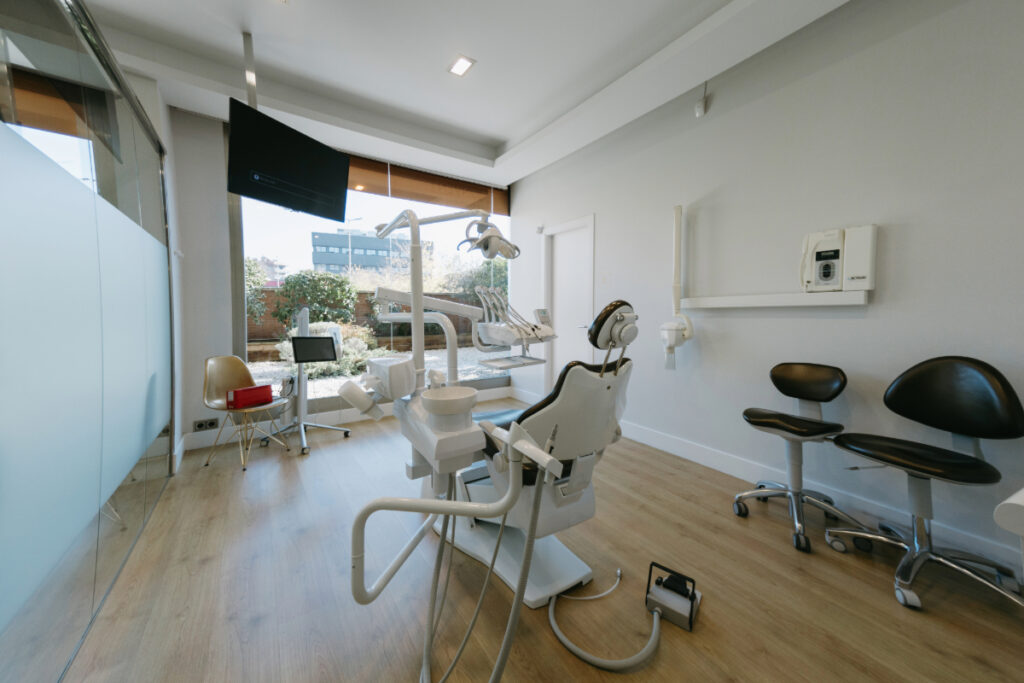
Harpenden Dental Practice offers expertly delivered dental implant treatment from our private clinic in the heart of Harpenden. Led by Principal Dentist Mohamed Isacc, we provide tailored solutions for replacing missing teeth with permanent, secure and natural-looking results. Our calm and professional environment is designed to help you feel at ease from your initial consultation through to your final restoration.
At our practice, your comfort and confidence are our top priorities throughout every stage of your dental implant journey. From the first consultation, we take the time to understand your needs and explain each step in detail, so you always feel informed and supported. Our team is here to guide you from start to finish — and beyond — with expert care, open communication, and ongoing follow-up to help you maintain the health and success of your new smile.

Your journey begins with a comprehensive consultation where we assess your oral health, discuss your goals, and determine if dental implants are the right solution for you. Using advanced digital scans and X-rays, we gain a detailed understanding of your bone structure and create a customised treatment plan tailored to your unique needs.

Once you're ready to proceed, we place a small titanium implant into the jawbone under local anaesthetic. This implant acts as an artificial tooth root, providing a strong and stable foundation for your future restoration. The procedure is performed with precision and care to ensure optimal comfort and results.

Over the next several weeks or months, your implant will naturally bond with the jawbone in a process called osseointegration. This critical healing phase allows the implant to become securely anchored, mimicking the strength and stability of a natural tooth root. During this time, we monitor your progress to ensure proper integration.

Once healing is complete, we place a custom-designed crown, bridge, or denture onto the implant, restoring the function and appearance of your smile. We also provide ongoing care and regular follow-up appointments to maintain the health and longevity of your implant, ensuring your results last for years to come.

Take the first step towards a lasting solution – book your dental implant consultation today.
Choosing dental implants is a big decision, and it’s natural to have questions or concerns. We’ve answered some of the most common queries to help you feel fully informed and confident about your treatment.
A dental implant is a small titanium post that replaces the root of a missing tooth. It is surgically placed into the jawbone and supports a crown, bridge, or denture, restoring both function and appearance.
Most healthy adults with good oral hygiene and sufficient bone density are suitable candidates. Patients with certain medical conditions or low bone levels may require additional treatment such as a bone graft before implant placement.
Yes. Age is not a limiting factor — overall health and bone quality are more important. Many patients in their 60s, 70s, or even 80s successfully have dental implants.
Yes, Dental implants are a safe and highly successful treatment, when carried out with a proper plan.
Modern dental implants have a success rate of 95–98% when placed and maintained properly. one of the highest of all dental treatments.
The full process can take several months, depending on healing time and whether additional procedures (such as bone grafting) are needed. In some cases, implants can be restored with a crown on the same day.
We will carry out X-rays or 3D CBCT scans and provide pre-surgery instructions. Keeping your mouth clean and following advice ensures the best outcome.
Typically, you’ll need 3–5 visits:
The procedure is usually carried out under local anaesthetic. Mild discomfort or swelling afterward is normal and can be managed with pain relief.
Sedation options are available to help you feel relaxed and comfortable during treatment.
Most patients return to work the next day or within 24–48 hours. If multiple implants or grafting are done, a slightly longer recovery may be needed.
It’s best to avoid travelling for a few days post-surgery to allow initial healing. Once approved by your dentist, flying is safe.
Initial healing usually takes 1–2 weeks. Full osseointegration with the jawbone can take 3–6 months.
Soft foods are recommended during the first few days. Once healing is complete, you can eat normally.
Only temporary restrictions immediately after surgery. After healing, there are no food restrictions.
No. Temporary restorations or dentures can be fitted so you can smile and eat confidently.
Brush twice daily, floss, and attend regular dental and Hygienist visits.
Maintain excellent oral hygiene, avoid smoking, limit sugary snacks, and attend professional cleanings regularly.
Use a soft toothbrush, non-abrasive toothpaste, and floss or interdental brushes. Regular hygiene visits help prevent inflammation (peri-implantitis).
Peri-implantitis is inflammation or infection around the implant, similar to gum disease. Good hygiene and early detection prevent it.
Risks include infection, implant failure, or nerve irritation. These are rare, and your dentist will discuss them beforehand.
Failures are rare, with success rates above 95%. Proper care and regular follow-ups reduce risks.
Smoking can affect healing and increase the risk of failure. Reducing or quitting smoking improves outcomes.
Many patients with controlled conditions like diabetes or hypertension can safely have implants. Your dentist will review your medical history.
Yes, but protective measures like a night guard may be recommended to prevent damage.
Bridges and dentures exist, but implants are the most stable, natural, and long-lasting option.
Missing teeth can cause drifting, bone loss, and bite problems. Implants help maintain alignment and facial structure.
A bridge uses neighbouring teeth for support; an implant stands independently, preserving natural teeth.
Yes. Multiple implants can support bridges or full dentures (e.g., All-on-4 / All-on-6).
Yes. Crowns are custom-made to match the colour, shape, and size of your natural teeth.
Most implants are medical grade titanium; zirconia (ceramic) options are available for metal-free solutions.
4A Leyton Rd,
Harpenden,
Hertfordshire,
AL5 2TL